


Many people come to a point in life sooner or later when knee pain starts bothering them.It becomes difficult to walk, there is a desire to limp in your leg, it bothers you, it does not spare you.Over time, the pain intensifies and begins to accompany the unfortunate person wherever he goes.Finally, it interferes so much that the person consults a doctor or seeks information about his problems.
Often, in this case, the doctor diagnoses "deforming arthrosis of the knee joint" based on the symptoms.Let's take a closer look at what it is, how it manifests itself, where it comes from and where it leads.And most importantly, how to get rid of it?
What is this?
This is a process in which cartilage tissue is destroyed.In this case, joint inflammation called synovitis often occurs.Subsequently, the knee deforms and movements become painful or impossible at all.
Who can get sick?
This disease is diagnosed based on a number of symptoms.In general, they are quite specific and characteristic of all types of diseases.
Before finding the cause of knee pain that bothers you from time to time or constantly, let's see which category of people are susceptible to this disease:
- overweight people.It makes sense that obesity and excess weight increase the pressure on the feet during walking.As a result, the cartilage that cannot cope with the load is destroyed;
- athletes.The occurrence of the disease is associated with extreme stress experienced by athletes during training;
- varicose veins.In this case, the cause is a violation of blood supply, a decrease in the supply of nutrients;
- people with leg injuries.
Belonging to one of these categories significantly increases the risk of developing knee arthrosis.Now let's look directly at its symptoms.
How to recognize the disease?
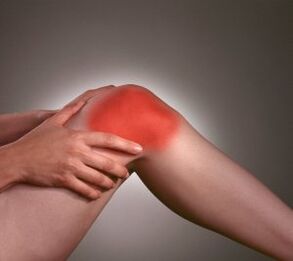
The development of the disease can continue for a very long time - for several years a person does not feel anything, does not suspect that the disease has begun to develop.Over time, the manifestations intensify and a clear concern appears.
There are several stages of its development:
- Arthrosis of the knee joint 1st degree.It can be completely asymptomatic for a long time, or it can manifest itself as periodic mild pain and mild discomfort.When a person gets out of bed in the morning and starts walking, the feelings intensify.Anxiety is felt more clearly when a person goes down or up stairs.This degree can last for several months or even years.If you see a doctor at this stage, recovery will be much easier than waiting until the later stage.
- Arthrosis of the knee joint 2 degree.The patient begins to feel a characteristic crunching sound when walking, which is sometimes accompanied by severe pain.Movements seem to be limited, restricted.During the examination at this stage, the doctor can detect a small deformation and the beginning of fluid accumulation.This phase includes drug treatment and regular therapeutic exercises.
- Arthrosis of the knee joint 3rd degree.During this period, severe deformation appears, movements become very difficult.The patient has problems bending and straightening the leg.The pain is constant and worsens with changing weather conditions.The characteristic gait is seen in half bent legs, with the legs in a curved X or O shape.
Treatment methods depend on the degree of manifestation of symptoms, the stage of development and become more complicated as they progress.
Why does it appear?
There are many causes of knee injuries, and they directly depend on the form of the disease - primary or secondary.
The primary form occurs due to congenital reasons;begins to appear at an early age.Due to pathologies in the development of the garden apparatus, there is a lot of stress on it during walking.This leads to the development of the disease.Due to timely medical intervention and adherence to a certain diet, the initial form of knee injury will be eliminated.
The secondary form is the result of injuries and diseases.
Let's consider all the causes of the disease:
- rheumatic diseases (rheumatism, arthritis) can be the root cause.With long-term arthritis, fluid accumulates, causes inflammatory processes and eventually leads to the development of the disease;
- being overweight also contributes to problems due to increased load on the cartilage layer and, as a result, its premature damage;
- metabolic disorders that lead to the deposition of salts in the joint space, difficulty in blood circulation;
- long-term spasms of muscles or blood vessels in the legs;
- surgical interventions;
- too much stress on the legs during sports activities;
- injuries: dislocations, fractures, bruises accompanied by damage to the cartilage layer and ligaments.
One of the main roles in the treatment of deforming arthrosis of the knee joints is given to the elimination of the causes that lead to the development of the disease.And only after getting rid of the causes, we can talk about the possibility of treating the disease itself using various means, methods, as well as the right diet.
How can it be treated?
How to treat gonarthrosis can only be determined by a specialist, who focuses on the stage of development of the disease, the severity of cartilage damage and determines the exact cause of the disease.Methods, types, and methods of therapy are diverse and often effective only in combination.Therefore, you should approach this issue responsibly and carefully follow all the doctor's recommendations.
It should be taken into account that this is a chronic disease that can rarely be completely cured, so any treatment method is primarily aimed at the remission and disappearance of symptoms.However, at the very first stage of development, when problems have just started, it is possible to completely get rid of knee joint damage by eliminating its causes (for example, excess weight or excessive stress) and performing simple physical therapy.
In most cases, therapy is aimed at relieving a person's pain, restoring damaged cartilage, and returning full range of motion.
Therapy combines the following methods:
- the use of drugs and medicines, medicated ointments;
- providing therapeutic massage and manual therapy;
- physiotherapeutic methods: therapeutic exercises, exercise therapy;
- surgical intervention if necessary;
- folk and non-traditional methods of treatment.
How and what drugs are used?
The first goal of drug therapy is to relieve pain.Nonsteroidal anti-inflammatory drugs are used to effectively relieve pain.
These drugs do not cure the disease or prevent its development - they are only designed to relieve pain.Their use should be combined with the use of drugs to restore the function of damaged cartilage with arthrosis of the knee joint (symptomatic slow-acting drugs) and ointments.They have a number of side effects - mainly they have a negative effect on the mucous membranes.Only the doctor should determine the dosage and frequency of medication.Do not try to treat yourself - this will inevitably lead to negative processes.
There are also observations that large doses of anti-inflammatory non-steroidal drugs have a destructive effect on cartilage.
Only when non-steroidal drugs no longer have an effect, the doctor can prescribe strong analgesics with a central effect.
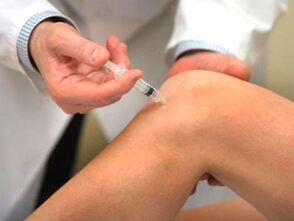
In addition to painkillers, gymnastics and massage, the following group of drugs is used - corticosteroids, the purpose of which is to eliminate inflammatory processes.These are hormonal drugs, the effect is very strong, so it is not recommended to take them orally.In addition, their use causes many side effects.Recently, some corticosteroids are given by injection into the affected area.
The next group of drugs - symptomatic delayed action - stimulates the synthesis of healthy cartilage cells (chondrocytes) that replace the destroyed ones.The active substances that make up these drugs are similar in many ways to those that form cartilage tissue, and when they get inside, they stop its destruction and stimulate the reproduction of cells.
Be sure to consult a specialist before taking such drugs: the fact is that these drugs are effective only for the first and second degrees of the disease.In the third degree, the cartilage is already completely destroyed and there is nothing to restore it.
What non-drug methods are used?
A combination of exercise therapy and physiotherapy sessions is most effective in the treatment of arthrosis of the knee joints.Physiotherapy exercises should be performed only under the supervision of a specialist.Physical activity should be moderate, dosed and regular.
When performing exercises, it is useful to undergo physiotherapeutic procedures such as ultrasound, high-frequency magnetic therapy, radon, hydrogen sulfide baths, and laser treatment.All these procedures not only eliminate the knee injury, but also strengthen the body in general.
It should be remembered that exercise therapy classes are possible only during the first degree of the disease or its remission - that is, only when visible manifestations (inflammation, pain) are absent or almost absent.If your condition does not allow it, it is better to refuse the exercise.
Before starting therapeutic exercises, consult a physical therapy instructor who will create an individual exercise program for you after the examination and show you the entire complex performed until recovery.
Exercises must be performed strictly according to the schedule and with the load that the instructor will set for you.Incomplete lessons will make the procedures ineffective, so follow all the instructions regularly and responsibly.Only then can we hope for a truly positive result.
Exercises should be combined and completed with manual therapy - massage by a specialist or after learning how to do it yourself.Massage allows the muscles to relax and improve blood supply to the cartilage layer.
What are the auxiliary methods?
Many doctors recommend using special knee braces.They increase the effectiveness of therapy and relieve pain.An elastic bandage is used for the same purpose.
Knee pads straighten the ligaments and partially resist the deformation process.This facilitates the movement of the patient in the second stage of the disease, because walking is already a problem for such people.
Knee pads can be used for preventive purposes by those who experience physical stress, overweight people and athletes during training to reduce the traumatic effect of walking.
It is better to consult a doctor when choosing knee pads.Knee pads differ in the degree of fixation: tight, medium and light.In the most advanced stage of the disease, dense ones are used, and in the first stage, light ones are used.When using them, it is necessary to ensure that the leg does not become numb: numbness means that blood stagnation has occurred, which can lead to disastrous consequences.
The heating effect of the knee ligament relieves pain, which allows you to reduce the dose of painkillers.There are knee pads made of camel and dog hair.Wool itself has a beneficial effect, thanks to which, if you do not cure the disease, you can at least alleviate the condition and speed up the healing process.
Is it worth using folk medicine?
Folk remedies for the treatment of arthrosis of the knee joints can be used only after consultation with a doctor and only as an auxiliary method.Using only traditional methods without using traditional medicine in itself is ineffective and dangerous and can lead to negative consequences.
Among the folk remedies used in the treatment of knee arthrosis, various rubs, compresses, ointments from natural substances, rubbing, herbal preparations and infusions are used to relieve pain and eliminate the inflammatory process.There are many different recipes for the preparation of remedies used by our ancestors.Their healing properties have been proven and unquestioned through centuries of use.Burdock compresses, cranberry juice rubs, mummy and beeswax are just a few of the many folk remedies.
Recently, treatment with leeches (hirudotherapy) has become increasingly popular.Hirudotherapy sessions eliminate inflammation and act as a powerful pain reliever.
As you know, leeches increase blood circulation in the treated area.Increasing blood supply to the painful area significantly accelerates the regeneration of cartilage tissue and cleaning of affected cells, and provides more nutrients to the wound area.
Thus, the use of folk remedies and hirudotherapy together with drug treatment, manual and physiotherapy and therapeutic exercises promotes complete recovery.